Written by: Kari Kurto, National Director of Policy and Partnerships
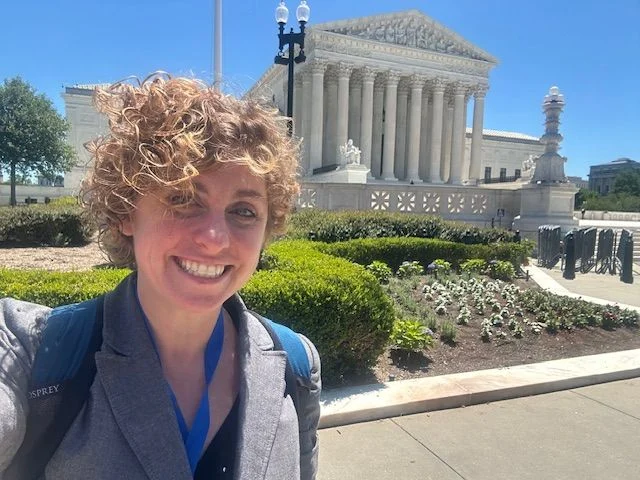
In early June, I had the privilege of participating in the American Association of Colleges for Teacher Education (AACTE) Washington Week, where educators, preparation program leaders, policymakers, and advocates gathered to discuss federal education policy and advocate for continued investment in educator preparation.
Over three days of learning and advocacy, I left Washington with a renewed appreciation for the importance of collaboration, policymaking, and sustained investment in the educator workforce because with our nation’s focus on infrastructure, it is important to see education as the human infrastructure necessary to build our future. While many conversations focused on current challenges, they also highlighted opportunities to strengthen the systems that prepare and support teachers. The following reflections capture several key takeaways from my time in Washington, D.C.
Day 1: Collaboration Over Fragmentation
The conference opened with a panel featuring Cheryl Holcomb-McCoy, President and CEO of AACTE; Kathlene Campbell, CEO of the National Center for Teacher Residencies (NCTR); and Valerie Sakimura, Executive Director of Deans for Impact.
A consistent theme throughout the discussion was the importance of unity across the educator preparation landscape. The panelists emphasized that passion for students, while essential, is not sufficient on its own. Preparing and supporting effective educators requires organizations to work together around shared goals, clear messaging, and evidence-informed practices.
Holcomb-McCoy stressed that healthy debate should not be feared. Productive disagreement can strengthen the field, whereas fragmentation weakens it. She also challenged attendees to consider how society views the teaching profession. When high school students question why they should become teachers, she argued, that reflects a broader societal responsibility to elevate and support the profession.
The panel identified several significant challenges facing educator preparation and the broader education workforce:
- The high cost of becoming a teacher relative to compensation levels
- Ongoing shortages of teachers and school leaders
- Increasing scrutiny of educator preparation programs
- Policy decisions that, while well-intentioned, can produce unintended consequences
As an example, Holcomb-McCoy referenced the unintended effects of Brown v. Board of Education, which contributed to the loss of many Black educators from the profession following school integration.
Despite these challenges, the panelists remained optimistic. Each pointed to collaboration as a source of hope. Sakimura noted that meaningful partnerships often require individuals and organizations to step back from their own priorities in the service of a larger goal. Holcomb-McCoy reminded participants that “disagreement does not mean disengagement,” while Campbell highlighted the promise of cross-sector partnerships that bring together public agencies, private organizations, school systems, and higher education institutions.
Their comments reminded me of The Reading League’s involvement in The Path Forward initiative in New York. This effort brings together educator preparation faculty, policymakers, funders, technical assistance providers, school partners, state education leaders, and government officials to support pilot educator preparation programs. The initiative demonstrates what is possible when stakeholders move beyond division and work collectively toward a shared vision for preparing future educators.
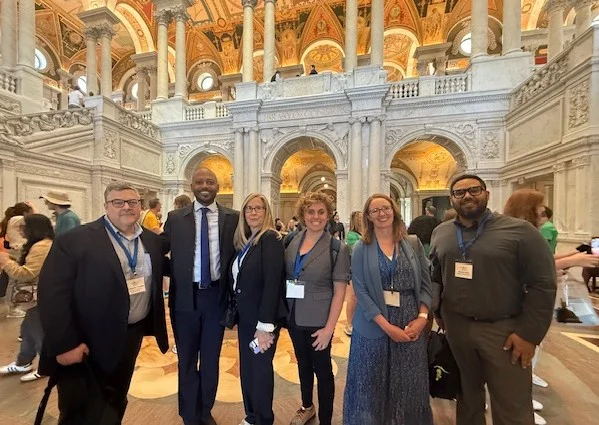
Dr. Christopher Trombly, Jaquan Beachem, Dr. Katherine Roe, Kari Kurto, Dr. Danielle Dennis, and Michael Vidal.
Understanding the Federal Landscape
The next session focused on the federal appropriations process, the future of key educator preparation grants, and the broader policy environment shaping higher education.
Panelists discussed programs such as the Teacher Quality Partnership (TQP) and Supporting Effective Educator Development (SEED) grants and expressed cautious optimism about continued bipartisan support for educator preparation. While participants acknowledged political differences regarding federal oversight, there was broad recognition of the importance of maintaining investments in programs that strengthen the educator workforce.
A recurring topic was the potential transfer of some education-related programs to the Department of Labor. Panelists explored both the opportunities and concerns associated with such a move, including questions about whether educational expertise could be maintained if programs were administered outside the Department of Education.
The discussion also addressed efforts to alter traditional peer-review processes for federal grants. Several speakers emphasized the importance of preserving rigorous, expert-led review systems and encouraged attendees to communicate directly with legislators about the potential impact of policy changes on higher education and educator preparation.
One particularly insightful discussion centered on the federal appropriations process. Jared Bass explained that while Congress authorizes funding, the Office of Management and Budget (OMB) plays a significant role in how funds are ultimately allocated. He noted that increased transparency tools now allow the public to better understand how funding decisions are implemented, providing advocates with valuable information to monitor and respond to policy changes.
While panelists identified several areas of concern, they also emphasized that policy environments are constantly evolving. Their message was clear—today’s challenges do not define the future, and meaningful advocacy can influence outcomes.
Session III: Understanding the Administration’s Actions on Federal Grants, Research, and Apprenticeships
The final panel I attended focused on the administration’s actions related to federal grants, research, and apprenticeships. The session was moderated by Patrick Steck, Vice President of External Affairs at Deans for Impact, and featured Steve Pierson, Director of Science Policy at the American Statistical Association; Amber Northern, Senior Vice President for Research at the Fordham Institute and Senior Advisor in the Office of the Secretary of Education; and Megan Baird, Acting Administrator of the U.S. Department of Labor’s Employment and Training Administration, Office of Apprenticeship.
The panel provided attendees with an opportunity to hear directly from leaders working within and alongside federal agencies at a time of significant change. Northern discussed the U.S. Department of Education’s commitment to ensuring that evidence-based literacy practices, including the science of reading, are not only incorporated into educator preparation programs but are also meaningfully demonstrated through clinical experiences and teacher apprenticeship models.
Baird shared the rationale behind strengthening collaboration between the Departments of Education and Labor through an Interagency Agreement (IAA). She described the administration’s focus on aligning education and workforce development systems, emphasizing career pathways, adult education, career and technical education, and registered apprenticeships. Rather than viewing education and workforce preparation as separate endeavors, she described a vision in which the two systems work in tandem to prepare students for long-term success.
The discussion included questions about the future of federal education programs and agencies. Northern noted that the Institute of Education Sciences (IES) operates with a degree of independence and has not been incorporated into the current interagency efforts. She expressed hope that IES would continue its important role in supporting educational research, data collection, and evidence-building.
Steck raised concerns that many educators have expressed about proposals to reduce the Department of Education’s role. He noted that the department houses significant educational expertise and sought clarification about how that expertise would be maintained. In response, Baird reiterated that the goal is not to diminish educational priorities but to strengthen the connection between education and workforce development. She cited substantial growth in registered teacher apprenticeships as evidence that new pathways into the profession are gaining momentum and helping to address workforce needs.
The conversation also addressed the future of the National Assessment of Educational Progress (NAEP). Northern assured attendees that NAEP remains a priority and that federal support for the assessment will continue. She encouraged states to use NAEP data to drive continuous improvement and increase academic rigor for students.
As the discussion concluded, panelists emphasized the importance of collaboration, innovation, and public engagement. Pierson encouraged attendees to remain vocal about the data, research, and information needed to prepare future educators and inform sound policymaking. Together, the panelists reminded participants that education policy is ultimately shaped not only by elected officials but also by educators, researchers, advocates, and communities working together to meet the needs of future generations.
Closing Remarks: Preparing the Future
The conference concluded with remarks from Kirsten Baesler, Assistant Secretary of the Office of Elementary and Secondary Education at the U.S. Department of Education. Addressing the audience as “her people,” Baesler spoke not only to leaders in higher education but also to those responsible for preparing the next generation of educators.
Throughout her remarks, Baesler emphasized that nothing is more important to the success of our education system than the quality of our teachers. She described educator preparation programs as a critical part of the nation’s educational infrastructure, noting that decisions made today by these programs will influence classrooms and student outcomes for decades to come.
Baesler outlined several priorities guiding the administration’s work, including evidence-based literacy instruction, meaningful student engagement, expanded career pathways, and the responsible integration of artificial intelligence. She stressed that AI should be viewed not as a replacement for teachers but as a tool that can enhance learning and empower educators to better meet students’ needs.
She also highlighted the importance of strong partnerships between educator preparation programs and school districts. Effective teacher preparation, she argued, requires alignment across multiple levels of the education system, including state priorities, district needs, and higher education programs. When these systems work together, future educators are better prepared to enter the profession and serve students successfully.
During the question-and-answer session, I asked Assistant Secretary Baesler about the administration’s emphasis on returning decision-making authority to states. She reiterated the belief that states are often best positioned to understand and respond to local needs while still advancing shared national goals for educational excellence.
Perhaps the most powerful part of her remarks came in her closing reflections. Baesler reminded the audience that every generation of educators faces defining moments that shape the future of education. The challenges may evolve, but the responsibility remains the same: ensuring that every child has access to a highly effective educator. She urged attendees to consider the multiplier effect of educator preparation. The teachers we prepare today will go on to teach millions of students throughout their careers, creating ripple effects that extend far beyond individual classrooms.
Her message served as a fitting conclusion to the week. Amid discussions of policy shifts, funding debates, and structural changes, she brought the focus back to the people at the center of the work—students and educators. Education is, at its core, human infrastructure. Investments in educator preparation are investments in communities, workforce development, civic participation, and the future of our country. As Baesler reminded us, ensuring access to excellent educators is one of the most important ways we can ensure access to excellent educational opportunities for all students.
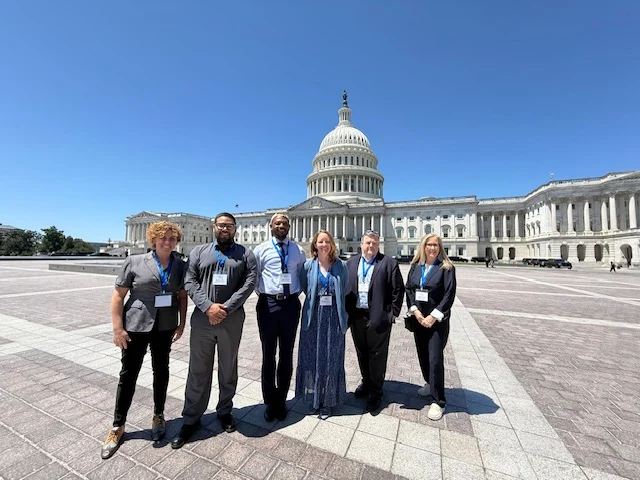
Kari Kurto, Holmes Scholars Michael Vidal and JaQuan Beachem, Dr. Danielle Dennis of the University of Rhode Island, Dr. Christopher Trombly of Southern Connecticut State University, and Dr. Katherine Roe of Western Connecticut State University.
Day 2: Education as Human Infrastructure
Day Two of Washington Week opened with a presentation from Sean Cavanagh, Managing Editor of Education Week, who shared national survey data on educator recruitment, retention, and morale.
Cavanagh highlighted the ongoing challenges facing the educator workforce and the importance of sustained investments in teacher preparation through grants, loan programs, and competitive compensation. According to Education Week’s research, shortages are most acute among substitute teachers, multilingual learner specialists, and special educators. Even when schools successfully recruit qualified candidates, offers frequently fall through. In more than half of those cases, salary concerns or the inability to afford relocation are key factors.
The data also revealed that the most successful recruitment efforts often stem from personal connections—recommendations from current teachers and strong partnerships between school districts and educator preparation programs (EPPs). This finding reinforced a theme that surfaced repeatedly throughout the week: relationships matter.
Cavanagh also shared state-by-state data on educator morale. Arkansas reported the highest levels of teacher morale, while Pennsylvania reported the lowest. Teachers with 3 years or less experience expressed higher morale than their more experienced colleagues, and world language teachers reported the highest levels of job satisfaction. English language arts teachers reported the lowest morale. Participants speculated that this may reflect the increasing pressures associated with supporting students who are struggling with reading and writing while navigating the growing complexities of today’s classrooms.
A Conversation With Senator Jack Reed
The next speaker was Senator Jack Reed of Rhode Island, a longtime champion of public education and educator preparation.
Senator Reed opened with a simple but powerful reminder, “A school is just a building without teachers.”
Throughout his remarks, he expressed concern about the repeal of Teacher Quality Partnership grants, reductions in research funding, and efforts to dismantle programs that support educators and students. While acknowledging that programs should be evaluated and improved when necessary, he cautioned against eliminating initiatives for ideological rather than evidence-based reasons.
Senator Reed also highlighted the nation’s growing literacy and numeracy challenges and called on attendees to support efforts such as the Right to Read Act and the Adult Education Act. He cited data indicating that hundreds of thousands of teaching positions remain unfilled nationwide and argued that addressing educator shortages requires federal leadership, not federal retreat.
He advocated for high-quality yet affordable pathways into the profession, criticized changes to Pell Grant eligibility that could create barriers to aspiring educators, and emphasized the importance of ongoing professional development for teachers.
“Being a good teacher requires a lifetime of learning,” he noted, adding that professional development remains one of the most important investments we can make in educational success.
Senator Reed urged participants to continue advocating for fair compensation, expanded support for educator preparation, and bipartisan backing for initiatives such as the TEACH Grant Program. He also reminded attendees that meaningful policy conversations often occur not only in congressional offices but within the communities legislators serve. Advocacy, he emphasized, is most powerful when policymakers hear directly from the people affected by their decisions.
Representative Alma Adams: The Heart of the Profession
The highlight of the conference for me was the keynote address delivered by Representative Alma Adams of North Carolina.
Senator Adams spoke passionately about teaching not simply as a job, but as a profession—and one that deserves to be treated as such. At a time when access to student financial aid is becoming more limited and prospective educators face increasing financial barriers, she stressed the importance of investing in those who choose to enter the profession.
Her remarks were both inspiring and deeply personal. She described the unique privilege of teaching as the ability to look a student in the eye and see potential before they see it themselves.
She framed educator preparation not as a peripheral policy issue but as the foundation upon which all educational success is built. If our nation truly views education as a public good, she argued, then we must confront years of underinvestment in the systems that prepare and support teachers.
Adams challenged the audience to recognize that many of the terms commonly invoked in education policy discussions—students with disabilities, multilingual learners, social-emotional learning—must be accompanied by meaningful supports rather than simply serving as political talking points.
Addressing the realities facing today’s educators, she stated that teachers are “leaving the profession not because they don’t love children, but because the system stopped loving them.”
She advocated for strengthening the educator pipeline through initiatives such as the Educators for America Act and called for stronger partnerships between educator preparation programs and school districts. She emphasized that aspiring teachers need financial support, mentoring, and practical pathways into the profession.
One statement in particular became the inspiration for the title of this blog:
“We need the federal government to invest in education with the same seriousness as workforce development because education is infrastructure.”
She then expanded on that idea, explaining that strong schools, effective educators, school leaders, librarians, support personnel, and a diverse educator workforce constitute the nation’s human infrastructure.
Her vision extended beyond recruitment and preparation. She argued that teaching should be an affordable career path that allows educators to grow, thrive, and remain in the profession. Just as teachers are expected to support the whole child, we must support the whole educator—through competitive compensation, mental health supports, strong communities, and stable career pathways.
She also emphasized that providing financial support to teacher candidates during clinical experiences and student teaching is not charity—it is smart policy.
As attendees prepared for their congressional meetings, Senator Adams offered a challenge that resonated throughout the remainder of the week. When policymakers argue that investments in educator preparation are too expensive, she encouraged us to ask, “Compared to what?”
The costs of inaction, she argued, are already visible: educator burnout, high turnover, declining enrollment in preparation programs, and students who do not receive the support they deserve. “Either we pay now,” she said, “or we pay later.”
She concluded with a call for collective action, urging educators, advocates, and policymakers to organize with the same determination as those seeking to weaken public education. Education, she reminded us, should never become a political punching bag.
Her closing words left the room energized and hopeful. Quoting Willie Jolley, she reminded us that “a setback is just a setup for a comeback.” She concluded with a fitting quote from Shirley Chisholm, “If you don’t have a seat at the table, bring a folding chair.”
Day Three: Advocacy on Capitol Hill
The final day of Washington Week focused on advocacy. Participants spent the morning reviewing the legislative priorities identified by AACTE, the National Center for Teacher Residencies, and Deans for Impact before heading to Capitol Hill.
I was fortunate to be part of a team led by Dr. Danielle Dennis, Dean of the College of Education at the University of Rhode Island. Our team included Katherine Roe of Western Connecticut State University, Christopher Trombly of Southern Connecticut State University, Rachel Motley of The Raben Group, and two outstanding Holmes Scholars, JaQuan Beachem and Michael Vidal.
Together, we met with staff from the offices of Senators Richard Blumenthal, Ed Markey, Jeanne Shaheen, Jack Reed, and Chris Murphy, as well as Representative Jahana Hayes.
Our Holmes Scholars led many of these conversations, sharing their personal journeys and describing how federal investments have shaped their paths as doctoral students and future leaders in education. Their stories brought the policy discussions to life and demonstrated the real-world impact of educator preparation funding.
The offices we visited were largely supportive of priorities that included expanding and strengthening TEACH Grants, recognizing education degrees as professional degrees for student loan purposes, reforming federal work-study programs, supporting the Head Start for Our Future Act and the Opportunities for Success Act of 2025, and increasing access to high-quality tutoring through the PATHS to Tutor Act.
These conversations were encouraging. It was reassuring to see that many policymakers and legislative staff understand the importance of investing in the educator workforce and remain committed to supporting future teachers and school leaders.
More broadly, the event itself served as a powerful example of the very collaboration that speakers had championed throughout the week. AACTE, NCTR, and Deans for Impact brought together individuals with shared goals, diverse perspectives, and a common commitment to strengthening educator preparation.
The experience reinforced a lesson that emerged throughout all three days: meaningful change happens when organizations work together, policymakers listen to practitioners, and advocates continue to make their voices heard.
Through our learning and advocacy, we worked to support the educators who will shape future generations—the human infrastructure of our country.