Case Study
Christ Community Lutheran School
Christ Community Lutheran School (CCLS) is a faith-centered private school in St. Louis, Missouri, serving students from early childhood through eighth grade across four campuses.
LOCATION: St. Louis, Missouri
SCHOOL TYPE: Private Lutheran School
The Opportunity
Like many schools making the journey toward evidence-based instruction, CCLS sought to strengthen its systems in three key areas:
- Curricular Coherence: The school had previously relied on a balanced literacy, workshop-based model. Over time, teachers began supplementing with various evidence-based resources, creating an informal patchwork of instruction across classrooms.
- Assessment Precision: CCLS relied primarily on a broad, nationally normed assessment. While helpful for macro-level tracking, teachers needed a frequent, instructionally responsive tool to pinpoint specific needs in foundational skills in real time.
- Systemic Structures: Instructional time and scheduling varied across grade levels, lacking a unified structure to protect core reading blocks and ensure dedicated, flexible time for intervention.
Partnership in Action
1. Transitioning to High-Quality Core Curriculum
Historically, CCLS used a workshop-based literacy model while gradually incorporating research-informed instructional practices. During the partnership, the school took an important next step by piloting Amplify CKLA, an evidence-aligned literacy curriculum designed to provide all students with access to consistent, high-quality instruction. To support this transition, teachers participated in professional learning focused on:
- The science of reading
- Phonemic awareness and phonics
- Advanced word study
- Addressing gaps in word recognition
These learning experiences, along with implementation support visits and leadership coaching, helped develop strong foundational knowledge in evidence-aligned reading instruction and positioned the school for successful curriculum adoption.
2. Refining Data-Driven Decision Making & Diagnostic Precision
In the past, CCLS had relied primarily on nationally normed assessments to monitor student achievement. Consistent with TRL guidance, CCLS expanded its use of Curriculum-Based Measures (CBMs) by adopting DIBELS to gain a frequent, instructionally responsive view of student development. Working with TRL, the school moved toward administering full subtest batteries across K–4, unlocking actionable, diagnostic insights:
- Early CBM data revealed that while students demonstrated strong phonemic awareness and decoding skills with nonsense words, they needed additional practice building letter-sound automaticity and fluency with connected text containing regular and irregular words.
- Upper elementary scores showed consistently high language comprehension (>80% at benchmark), helping teachers identify reading fluency—rather than core comprehension—as the primary target for refinement.
3. Redesigning the Master Schedule: Protecting Time for Literacy
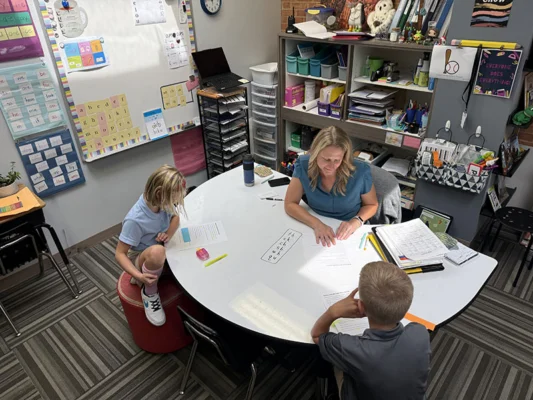
In collaboration with TRL and the school’s Literacy Implementation Team (LIT), CCLS restructured its master schedule. One of the most significant changes was the creation of a dedicated WIN (“What I Need”) block across grade levels for all students.
This protected time allows teachers to provide:
- Targeted intervention
- Enrichment opportunities
- Flexible grouping
- Small-group instruction tailored to individual student needs
By intentionally protecting literacy time within the school day, CCLS strengthened both consistency in core instruction and flexibility to meet students where they are, allowing their reading interventionist to provide targeted support to their most fragile learners during a time when they would not miss core instruction.
4. Strengthening Leadership Systems & Coaching
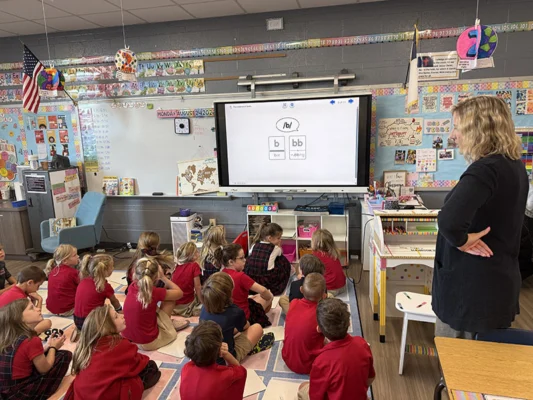
A major focus of the partnership was ensuring that evidence-aligned reading instruction was consistent across classrooms. Working alongside school leaders, The Reading League helped establish shared instructional “look-fors” and develop a classroom walkthrough tool that created common expectations for observation, coaching, and feedback. As implementation progressed, classroom observations reflected increasingly consistent use of high-impact instructional routines, including:
- Explicit instruction
- Structured student response opportunities
- Choral responding
- Turn-and-talks
- Whiteboard responses
- Evidence-aligned instruction in phonemic awareness, decoding, encoding, morphology, and intervention practices
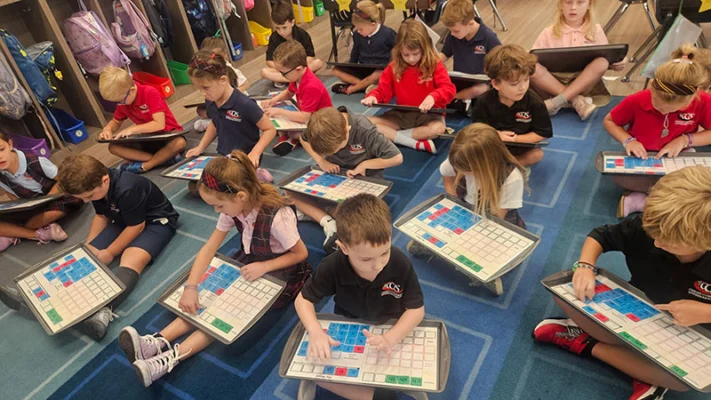
Coaching visits also documented meaningful improvements in student engagement. During one classroom observation, The Reading League noted a “dramatic shift” in participation, with every student actively engaged.
The Impact & Key Results
In just one year, CCLS has made meaningful, measurable progress toward a more coherent and evidence-aligned approach to literacy instruction. Classroom observations conducted during TRL’s most recent implementation support visit documented widespread evidence of explicit and systematic phonemic awareness instruction in kindergarten and first grade, phonics and decoding work across K–2, and high levels of student engagement in all visited classrooms.
These results are showing up in the following ways:
Classroom & Student Level Impact
- Sustained High Outcomes: Maintained strong literacy achievement across grade levels, culminating in nearly 90% of kindergarteners reaching spring DIBELS benchmarks.
- Targeted WIN Time: Intervention time became structured and purposeful. In classrooms utilizing six-step lesson plans during WIN time, students demonstrated high engagement and accelerated growth.
- Skill-Specific Precision: Full implementation of DIBELS provided teachers with clear, actionable data to refine letter-sound automaticity and text fluency.
Systemic & Leadership Level Impact
- Curriculum Coherence: Successfully piloted and adopted Amplify CKLA K–5, establishing consistent, high-quality core instructional materials across the school.
- Protected Time for Literacy: Redesigned the master schedule to protect core reading instruction while ensuring equitable access to intervention and enrichment for all students.
- Distributed Leadership: Empowered the Literacy Implementation Team (LIT) to begin to lead data conversations, monitor walkthrough trends, and guide school-wide professional development priorities.
Looking Ahead
Christ Community Lutheran School’s partnership with The Reading League demonstrates what is possible when leadership commits to building coherent systems, and that commitment is met with expert support. To ensure this work is sustained for years to come, CCLS established a structured 3-Year Strategic Plan that will guide ongoing implementation and ensure that evidence-aligned literacy practices remain embedded across the school.
As the partnership continues, The Reading League will provide ongoing coaching and professional learning focused on strengthening language comprehension, with particular emphasis on complex text and fluency. This next phase of the work will support educators in bridging the research-aligned practices they are learning with the implementation of their new curriculum, helping ensure those practices are consistently reflected in classroom instruction. The partnership will also expand into the middle school, extending evidence-aligned practices across additional grade levels.
Interested in partnering with The Reading League? Learn more about our professional learning services at thereadingleague.org/professional-learning.