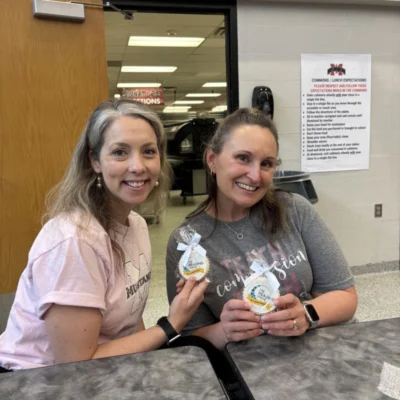
Some people come to literacy advocacy through research. Some through policy. Stephanie Dimmit came to it through her students and her son.
Over her 20 years in education, Stephanie has held almost every seat at the table: classroom teacher, instructional coach, reading specialist, and now a secondary multi-tiered system of supports (MTSS) literacy specialist and the Vice President of The Reading League Missouri. What’s driven her through every role is the same question: Are we actually teaching kids to read?
The Moment She Noticed the Gap
Stephanie began her career during the height of balanced literacy, an era when phonics instruction was often inconsistent, and the explicit, systematic teaching that many students need simply wasn’t happening. She started noticing students who struggled to decode unfamiliar words, falling further behind as texts grew more complex.
At home, those questions got more personal. Watching her son with dyslexia navigate a system where reading instruction varied widely, even within the same state, sharpened her sense of urgency in a way no professional development ever could.
Finding TRL: A Turning Point
When Stephanie heard David Kilpatrick speak at a conference and mention The Reading League’s work connecting research to practice, something clicked. She was actively searching for clarity, and what she found in TRL was a message that was consistent, grounded, and free of program promotion. It was just about the science of how students learn to read and how to apply it in real classrooms.
Her Wilson training deepened that shift. Despite already holding a master’s degree in reading, she found herself learning more about the foundations of reading during that training than she had in all of graduate school.
That realization changed not just her teaching but her sense of purpose. Stephanie now brings explicit, systematic instruction to every student she serves and monitors their progress constantly, adjusting based on their needs, not just a pacing guide.
Bigger Than One Classroom
At a certain point, Stephanie realized the work had to grow beyond her own room. “If we want to truly change student outcomes, we have to think system-wide.”
As VP of The Reading League Missouri, she connects educators to research, supports meaningful professional learning, and partners with district leaders to align instruction to the evidence. She’s helped launch a secondary Wilson program in her district and is stepping into a new role supporting all secondary students who need foundational literacy support.
To Stephanie, advocacy means building systems that ensure every student is screened, supported, and monitored. It also means having honest conversations about data and staying focused on solutions, not just problems.
“We have both the urgency and the knowledge. Now we need to act.”
We’re grateful for Stephanie’s leadership, and for the way she brings both her educator’s expertise and her mother’s heart to this work every single day. She is a reminder that the people closest to students are often the ones best positioned to change the system.
Your stories help bring our mission to life. If you’d like to share how The Reading League has supported your work, students, or community, we’d love to hear from you.
One more week to go! Next: Meet Christ Community Lutheran School and the two school leaders who committed to changing the way their entire community teaches reading.