Two years ago when I first heard a fellow Teacher on Special Assignment working with small groups in reading say that she didn’t believe in the Reading Recovery program I was shocked. I mean, wasn’t Reading Recovery the pinnacle of teaching literacy? How could it be possible to not believe in it?
I hold a reading specialist credential and have been a reading specialist off and on in a dual language Spanish immersion program since the early 2000’s. I started my career teaching kindergarten, and have also taught 3rd grade. In 2018-19, I returned to kindergarten, and implemented the same guided reading, cueing systems-based approach that I had used my whole career. I taught reading by using the most engaging books I could find in Spanish. I’d use anchor words and Spanish guided reading leveled books that we’d been using for years. I supplemented these books with our Estrellitas phonics program to teach letter sounds but the lessons were brief and students were expected to look at the first sound and then guess at the word based on the picture. In our dual language immersion program, we used realia to introduce vocabulary that students would then see in the book.
Many students were successful in this program. But I always had a bit of doubt as to why some of the students didn’t seem to grasp blending and decoding skills. And when the books got more difficult and students could no longer guess at the words just using the first letter, many seemed to get stuck. I looked at the students who were successful and thought, “Well, if they can do it then why can’t the rest of them?” Yet, every year there was a group of four to five kids in my class of 25 who just weren’t reaching our benchmarks. Not only were they not reaching benchmarks but we didn’t have a way to move them forward. Little did I know that outside of my classroom and our school, the science of reading was gaining a lot of attention and change was in the air.
The Lightbulb
When COVID hit I had the opportunity to come out of the classroom and be a Language and Literacy ToSA. Most of that year our administrator and my fellow ToSAs spent our time helping teachers navigate distance learning and then, eventually, open up the school again. As we re-opened there was a lot of concern about the skill gap that had happened during COVID.
Then, at a district meeting I was surprised to hear a well-respected administrator say that students needed to learn to decode words first and then apply comprehension. I couldn’t believe this, as it went against everything I had been taught, and worse, the way I had been teaching. I left the meeting confused and uneasy.
It was time for me to do some research. I first found a few blog posts that called into question the three-cueing system–apparently there isn’t actually any research to support it! And of course I listened to the Science of Reading podcast that said that kids need a more systematic approach to reading. Then, in some of our district-led professional development sessions we were presented with data that showed that at least 15% of students in each classroom across the country were not advancing in reading. These numbers backed up what I was seeing in my own classrooms. And, the data in our own district was just as dire–San Mateo had one of the biggest achievement gaps in the entire state of California, and our Latinx and SED population was scoring in the lowest quartile.
Now, that being said, the students in our Spanish immersion program are taught to read in Spanish, and most of our Latinx students in the upper grades had reading scores that were better than their counterparts in our district’s Structured English Immersion programs. But I thought that we could do better. COVID had motivated us to change what we were doing in a way that would catch students up. If we took a more systematic approach to teaching literacy, would students learn more quickly and soar to greater heights? Most importantly, could we eliminate the four to five students in every class that were getting stuck at a beginning level year after year? Could we achieve our goal of getting all students reading at grade level by second grade more easily with a more systematic approach?
The Experiment
As a ToSA, my job was to pull small groups for extra reading instruction. That year, instead of relying on my old guided reading method with my lowest readers, I experimented with using some old decodable books that I found in various lower grade classroom libraries. I taught syllables more explicitly and focused more systematically on phonemic awareness using the district-supplied Spanish Heggerty program. Even though I was just piecing together a curriculum using decodable books from different programs my lowest readers were more successful than they had been using the guided reading approach.
The Implementation
At this point, I was convinced that our district needed a more structured, systematic approach and I was ready to adopt something quickly. Luckily our administrators were on the same page and we moved quickly. We initially had a very successful meeting with Elsa Cardenas-Hagán and I came away convinced that her Esperanza program was the one for our school. But our district was going to adopt PAF for the English programs and we heard about their sister Spanish program from Argentina called Aprendo Leyendo. We got some sample books and were impressed with the authentic Spanish in the program; this was not simply a translation of the English program but a comprehensive Spanish program.
Our district moved fast and by the next summer, teachers were trained in Spanish over Zoom from our dynamic Argentinian trainers. At the beginning of the year we had begun to teach Aprendo Leyendo in the kindergarten, first and second grade classrooms. We shifted so quickly from one method to another that some of us have metaphorical whiplash. But despite that, the program has been a success. All students are learning to read, even those who had not been advancing using our old methods. Teachers are embracing the program as they see success in their students.
That’s not to say that it’s all been easy. Possibly the biggest challenge has simply been finding the time in the day to teach it. Each Aprendo Leyendo lesson takes at least 40 minutes–a lifetime in a dual-language immersion program because we have to teach in both languages. We have also found that we need to teach more vocabulary to our non-native Spanish speakers.
The program is not a magic bullet–certainly most students are successful but we still have a small handful of students that need to get Tier II support. Fortunately that handful is much smaller than it used to be, and with more practice, all students progress.
The other day I met with our second grade teacher team and one of the teachers mentioned that for the first time most of her students were able to independently read our Spanish core curriculum texts. The statement was simple, but profound. For the first time the students were able to read “grade level” material. The work we were doing with our systematic, structured approach was working.
We’ve also noticed that in general students are more motivated to read and instead of just looking at pictures they are willing to decode and seem to enjoy doing so. In the beginning, we were worried that students might not transfer the skills they’ve learned in Aprendo Leyendo to other books, that simply hasn’t been the case.
A note about assessment
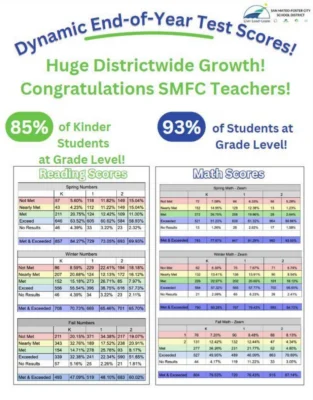
At this point our district is only using the assessments that go along with the Aprendo Leyendo program to show growth. In the meantime we are looking to adopt a new program for assessment soon. In our internal assessments all students are showing growth and all students in first grade are decoding.
All in all, I’m happy that our school has been able to make this shift and to have the support of our district to adopt an authentic Spanish language foundational literacy program. Hopefully next year we will be able to integrate the program more effectively with our Spanish core programs (Adelante and TWIG science). It’s been quite a journey to get to this point and there’s a lot more to do but it feels like we’re pointed in the right direction.
Written by: Cyrus Limón
Content Disclaimer:
The Reading League Blog features a range of perspectives intended to inform and support educators, leaders, and advocates. The views expressed are those of the authors and do not necessarily reflect the positions or policies of The Reading League.